Paraumbilical and Umbilical Hernias
What is a Hernia?
Hernias occur when an organ or tissue pushes through a weak spot in the surrounding muscle or connective tissue. While inguinal hernias are the most common type, umbilical hernias are prevalent as well, often occurring due to similar risk factors such as aging, obesity, previous surgeries, or abdominal trauma. Read more about Hernia Surgery here.

What is a Paraumbilical and Umbilical Hernia?
Paraumbilical and umbilical hernias are types of hernias that occur in the abdominal region near umbilicus (belly button).
Causes of Paraumbilical and Umbilical Hernias
Both paraumbilical and umbilical hernias can develop due to similar factors, including:
- Weakness in the abdominal wall muscles.
- Increased abdominal pressure from factors such as obesity, pregnancy, or chronic coughing.
- Prior abdominal surgeries or trauma.
- Inherent genetic weakness
Why is Surgical Repair Required?
Surgical repair is often necessary for paraumbilical and umbilical hernias to prevent potential complications such as bowel obstruction, incarceration, or strangulation. These complications can lead to severe pain, tissue damage, and life-threatening conditions if left untreated.
Surgical Repair of Paraumbilical and Umbilical Hernias
There are several approaches to repairing an umbilical hernia, each tailored to the individual patient's condition and the surgeon's preference. The two primary methods are open surgical repair and laparoscopic repair. Here's a brief overview of each:
Open Umbilical Hernia Surgical Repair:
- Incision: In open surgical repair, the surgeon makes an incision near the umbilicus (belly button) to access the hernia.
- Hernia Reduction: The protruding tissue or organs are gently pushed back into the abdominal cavity.
Laparoscopic Hernia Repair
This repair is good for small umbilical hernia as there is very little postoperative pain and a small incision.
- Small Incisions: Laparoscopic repair is a minimally invasive approach that involves making several small incisions in the abdomen.
- Disadvantages: Laparoscopic repair may not be suitable for all patients, especially those with extensive scar tissue or certain medical conditions that increase the risk of complications. Also it carries a higher chance of bowel injury compared to open repair.
Both open and laparoscopic approaches to umbilical hernia repair have their advantages and disadvantages, and the choice between them depends on factors such as the size and complexity of the hernia, the patient's overall health. Dr Golani will discuss the options with you in your consultation to determine the most appropriate treatment plan.
Recovery from Hernia Surgery
Following paraumbilical and umbilical hernia surgery, patients are advised to:
- Use over-the-counter pain relief medications as needed for discomfort.
- Refrain from driving for at least five days post-surgery to ensure optimal recovery.
- Avoid lifting weights exceeding 8kg for the first four weeks, gradually increasing to 15kg over the subsequent four weeks to prevent strain on the surgical site.
Important Points to Remember:
- No driving for 5 days post-discharge from hospital
- Your dressings are waterproof so you can shower as normal.
- Do not sit/soak in a bath for 7 days.
- Leave your dressings in place for 7 days and can be removed by the yourself
- Bruising and intermittent pain may continue for a few days
- Lifting weights may cause complications in your hernia repair. Limit lifting anything heavier than 8kgs for 4 weeks post-surgery. Additionally, you should not lift anything heavier than 15kgs for a further 4 weeks post-surgery
- Use regular fibre supplement such a Metamucil will help avoid constipation
- Walking unrestricted is allowed post discharge
- Cycling/running/swimming is allowed 2 weeks post discharge
- No special diet post-surgery is required to be followed.
- Make an appointment to see Dr Golani 4 weeks post-surgery.
Improved Quality of Life
After successful paraumbilical and umbilical hernia repair, patients often experience significant improvements in their quality of life, including reduced pain, increased mobility, and enhanced overall well-being.
Umbilical & Paraumbilical Hernia - Frequently Asked Questions
What's the difference between an umbilical and a paraumbilical hernia?
Both occur in the abdominal region near the umbilicus (belly button). An umbilical hernia forms directly through the belly button itself, while a paraumbilical hernia forms just beside it. Both develop for similar reasons and are treated with a similar surgical approach.
Can genetics play a role in umbilical hernias?
Yes. Alongside factors like abdominal wall weakness, obesity, pregnancy, chronic coughing, and prior abdominal surgery, an inherent genetic weakness in the abdominal wall can also make someone more prone to developing an umbilical or paraumbilical hernia.
Is laparoscopic repair suitable for all umbilical hernias?
No - not all umbilical hernias benefit from laparoscopic repair, as the risk can increase in certain cases, such as larger hernias or where there is extensive scar tissue. Dr Golani will advise you on the most appropriate operative option for your specific umbilical hernia during your consultation.
For general hernia questions - cost, surgical risk, mesh, robotic surgery, anaesthesia, and recovery for older patients - see the FAQ on our main Hernia Surgery page.
Your Consultation
Dr. Golani will provide further discussion regarding the specifics of your diagnosis during your consultation. Additionally, you'll have the opportunity to select the hospital for your procedure and potentially set the date for your procedure.
The best surgical hospitals in Sydney are available for your surgery:
- Sydney Adventist Hospital, Wahroonga
- The Mater Hospital, North Sydney
- Norwest Private Hospital, Bella Vista
- Hornsby Ku-ring-gai Hospital, Hornsby
To schedule a consultation with Dr. Golani, please contact our team for a consultation with Dr Golani. We have appointments available at three convenient locations across Sydney:

Please note that a GP referral will be required prior to your consultation.
 Hornsby Clinic Google Maps link here
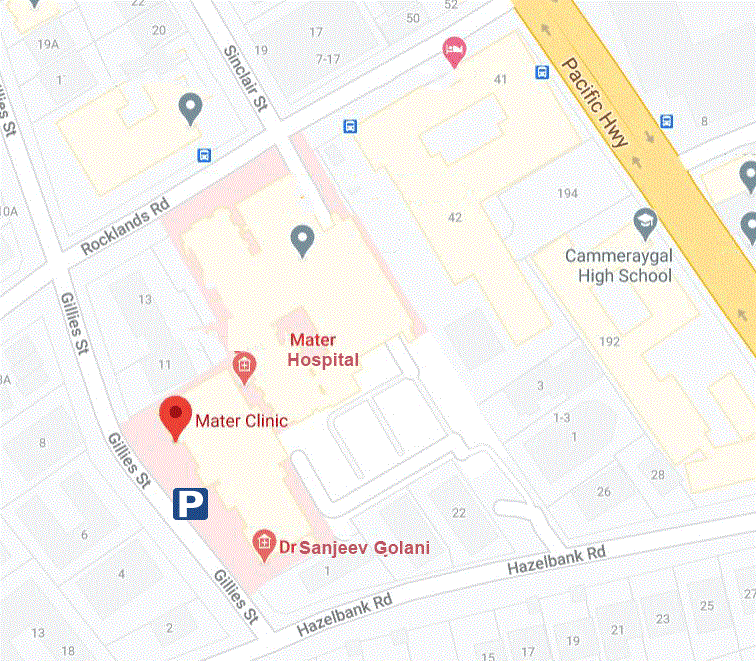 Mater Clinic Google Maps Link here
