Inguinal Hernia
Understanding Hernias
A hernia forms when an organ or tissue pushes through a weakened area of muscle or connective tissue. Inguinal hernias, the most common type, occur in the groin and account for a majority of hernia cases. Read more about hernia surgery here.

What is an Inguinal Hernia?
An inguinal hernia happens when tissue, such as part of the intestine, bulges through weakened abdominal muscles. It often causes a visible lump in the groin area and may lead to discomfort or pain, especially when coughing, bending, or lifting heavy objects.
Causes of an Inguinal Hernia
Several factors can contribute to the development of inguinal hernias:
- Weak abdominal muscles, often due to aging
- Strenuous physical activities
- Chronic coughing
- Conditions that increase abdominal pressure, such as pregnancy or obesity
Why Surgery is Important?
Inguinal hernias don't typically resolve on their own, and surgery is often recommended to prevent serious complications, such as:
- Bowel obstruction: A blockage in the intestine that can lead to severe pain and digestion issues. Read more about bowel obstruction here.
- Strangulation: Reduced blood flow to the herniated tissue, potentially causing significant damage and requiring emergency surgery.
What are the options for Inguinal Hernia repair Surgery?
There are two main types of surgery for inguinal hernias:
- Open Surgery: This traditional approach involves making a single incision at the site of the hernia. The surgeon repositions the bulging tissue and reinforces the abdominal wall with sutures or surgical mesh for extra support.
- Laparoscopic (Minimally Invasive) Surgery: This modern technique uses small incisions through which a camera and surgical instruments are inserted. Often referred to as Laparoscopic Totally Extraperitoneal(TEP) Repair , this method is considered the gold standard. Benefits include:
- Less pain after surgery
- Faster recovery time
- Lower risk of infection or complications
Laparoscopic Hernia Repair
Laparoscopic hernia repair is a minimally invasive surgical technique that is widely used to treat inguinal hernias. This method allows the surgeon to access the hernia through the preperitoneal space, avoiding the peritoneal cavity where abdominal organs are located.
Dr. Golani specialises in this advanced technique, which is renowned for delivering excellent surgical outcomes and smoother recovery for patients.
Key Steps of Laparoscopic Hernia Repair
During laparoscopic hernia repair, the surgeon performs the following key steps:
- Small Incisions: Small cuts are made near the navel.
- Visualisation: A thin tube with a camera, called a laparoscope, is inserted to provide clear visuals of the surgical site.
- Creating Space: Carbon dioxide gas inflates the abdominal cavity, creating room to operate.
- Reducing the Hernia: Herniated tissue is gently returned to its correct position within the abdominal cavity.
- Mesh Placement: A synthetic mesh patch is then positioned over the weakened area to reinforce the abdominal wall and prevent future hernias.
- Closure: The incisions are closed using dissolvable sutures.
Advantages of Laparoscopic Hernia Repair
- Minimally Invasive: Less pain, faster recovery, and smaller scars compared to traditional open surgery.
- Lower Recurrence Rates: The mesh provides durable reinforcement to prevent future hernias.
- Preservation of Peritoneal Integrity: Since the peritoneal cavity is not entered during a laparoscopic Hernia repair, there is a decreased risk of complications such as bowel injury or adhesions. These complications can particularly arise with other methods of repair like Open or Robotic Hernia repair.
Candidates for Laparoscopic Hernia Repair
Laparoscopic hernia repair is ideal for most patients, including those with:
- Recurrent hernias
- Bilateral hernias (affecting both sides)
During your consultation, Dr. Golani will assess your health and discuss the best treatment option for you.
Recovery After Laparoscopic Repair
Patients recovering from laparoscopic hernia repair can expect a quicker recovery than with traditional methods. Here are some key recommendations:
- Work: Sedentary jobs can be resumed in 7 days. More physically demanding roles may require 2-4 weeks of modified activities.
- Pain Relief: Over-the-counter medication can manage any discomfort.
- Driving: Avoid driving for at least 5 days after surgery.
- Lifting: Refrain from lifting over 8kg for 4 weeks; gradually increase to 15kg over the following 4 weeks.
- Physical Activity: Walking is encouraged immediately post-surgery; activities like running, cycling, and swimming can resume after 2 weeks.
Important Note: Showering is permitted with waterproof dressings, but baths should be avoided for the first 7 days.
Improved Quality of Life
Laparoscopic hernia repair has been shown to significantly improve patients' quality of life. Benefits include:
- Reduced pain
- Enhanced mobility
- Faster return to normal activities
Numerous studies, including this study (https://link.springer.com/article/10.1007/s10029-016-1558-7), have demonstrated the success of laparoscopic techniques in inguinal hernia repair. Patients often experience significant improvements in their quality-of-life post-surgery, including reduced pain, enhanced mobility, and increased overall well-being.
Inguinal Hernia - Frequently Asked Questions
What's the difference between open and laparoscopic inguinal hernia repair?
Open repair uses a single incision at the hernia site to reposition the tissue and reinforce the muscle wall. Laparoscopic repair - often called TEP (Transabdominal Extraperitoneal) repair - uses several small incisions and a camera instead, and is considered the gold standard for most patients, generally offering less pain, faster recovery, and lower infection risk.
Am I a good candidate for laparoscopic repair?
Laparoscopic repair is suitable for most patients, and is particularly well suited to recurrent hernias (where a previous repair has failed) and bilateral hernias (affecting both sides), since both sides can often be repaired through the same small incisions. Dr Golani will assess your individual situation during your consultation to confirm the best approach for you.
How soon can I return to work after inguinal hernia repair?
If your job is sedentary, you can typically return after about 7 days. More physically demanding roles usually need 2-4 weeks of modified duties before returning to full activity.
Does inguinal hernia surgery improve quality of life?
Yes - laparoscopic inguinal hernia repair has been shown in clinical research to meaningfully improve quality of life, with patients commonly reporting reduced pain, better mobility, and an easier return to normal activity.
For general hernia questions - cost, surgical risk, mesh, robotic surgery, anaesthesia, and recovery for older patients - see the FAQ on our main Hernia Surgery page.
Your Consultation
Dr. Golani will provide further discussion regarding the specifics of your diagnosis during your consultation. Additionally, you'll have the opportunity to select the hospital for your procedure and potentially set the date for your procedure.
The best surgical hospitals in Sydney are available for your surgery:
- Sydney Adventist Hospital, Wahroonga
- The Mater Hospital, North Sydney
- Norwest Private Hospital, Bella Vista
- Hornsby Ku-ring-gai Hospital, Hornsby
To schedule a consultation with Dr. Golani, please contact our team for a consultation with Dr Golani. We have appointments available at three convenient locations across Sydney:

Please note that a GP referral will be required prior to your consultation.
 Hornsby Clinic Google Maps link here
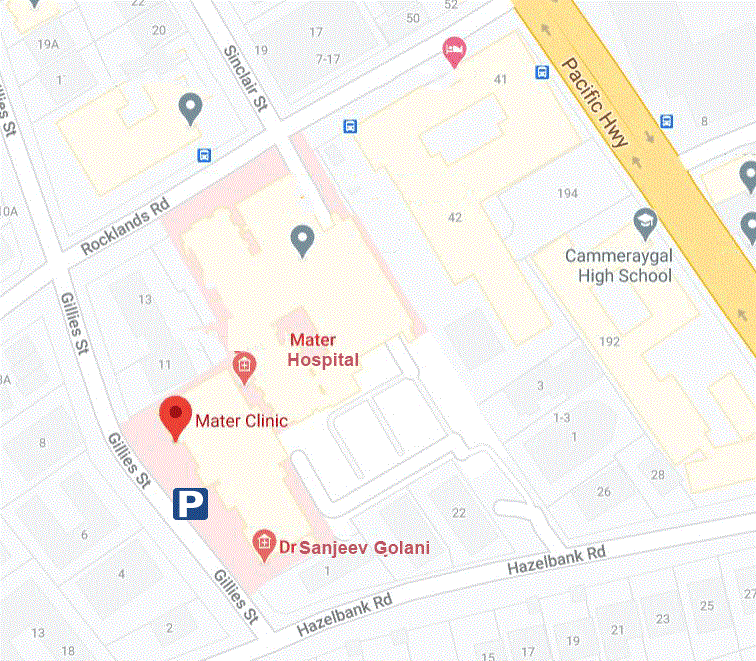 Mater Clinic Google Maps Link here
